Brake Pad Replacement in Pooler, GA
Worn brake pads are the most common reason drivers in Pooler call for mobile brake service. Pooler Mobile Mechanic brings brake pad inspection and replacement to your home, workplace, or roadside location so you do not have to drive a vehicle with unsafe brakes to a shop.
Licensed & Insured • 10 Years of Experience • 24/7 Availability • Call for current availability.
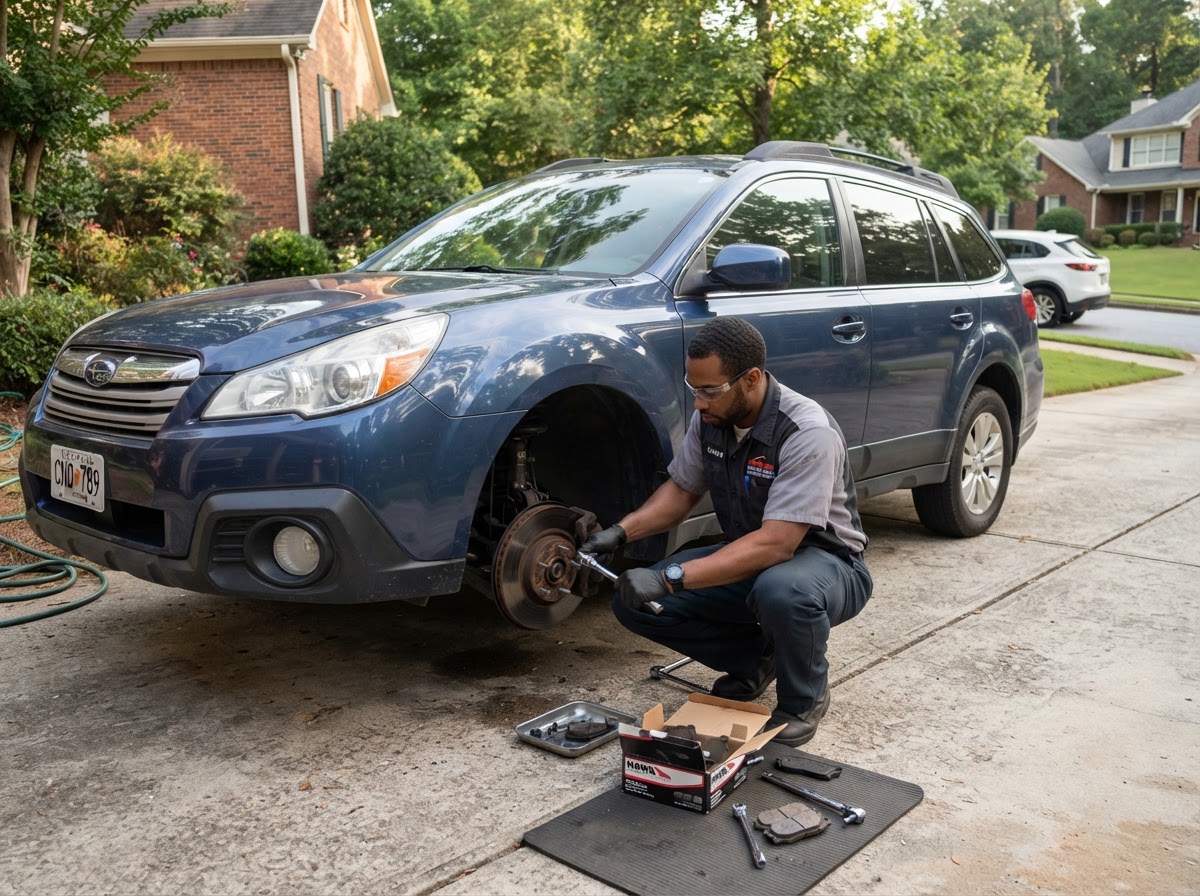
What Mobile Brake Repair Includes
Mobile brake repair covers the inspection, diagnosis, and replacement of common brake components performed where your vehicle is parked. Instead of arranging a tow and waiting in a shop, a mechanic comes to your driveway, workplace parking lot, or another appropriate location in Pooler, GA. Service typically includes a visual inspection of the brake system, measurement of pad and rotor thickness, testing of the brake hydraulics, and replacement of worn pads when appropriate.
Brake pad replacement is one of the most common on-site brake repairs. When the correct pads are available and the calipers and hardware are in serviceable condition, pads can often be replaced where the vehicle sits. Related work such as brake rotor replacement may also be performed on-site when needed. Not every brake problem can be fully resolved on-site — some repairs require equipment or parts that are not practical to bring to a vehicle — and we will always be upfront about what can and cannot be completed at your location.
Common Brake Symptoms
Brakes rarely fail without warning. The symptoms below are the most common reasons drivers in Pooler call for mobile brake service. Symptoms help describe the problem, but they do not by themselves identify the failed component — proper inspection and testing are needed before any parts are replaced.
Squealing or Grinding
A high-pitched squeal when braking often points to worn brake pads that have reached their wear indicators. A grinding sound is more serious and can mean the pads are worn through enough that metal is contacting metal, which can damage the rotors. Either sound is a reason to have the brakes inspected before driving the vehicle further.
Vibration While Braking
A steering wheel or brake pedal that shakes or pulses when you apply the brakes can indicate warped or unevenly worn rotors. Vibration can also come from other sources, so on-site inspection helps confirm the cause rather than assuming the rotors alone.
Soft or Unusual Brake Pedal
A brake pedal that feels spongy, sinks slowly to the floor, or requires more pressure than usual can point to air in the brake lines, a fluid leak, a failing master cylinder, or worn components. A pedal that is unusually firm or drops to the floor should be inspected before the vehicle is driven.
Brake Warning Indicators
A brake warning light or anti-lock brake (ABS) light on the dashboard signals that the vehicle's system has detected a problem. A warning light does not tell you which part failed, so on-site mobile diagnostics and a physical brake inspection are used together to identify the actual cause.
Inspection and Diagnosis
Brake repair starts with inspection, not guessing. A mobile mechanic visually checks pad and rotor thickness, looks for leaks at the calipers and lines, tests brake fluid condition, and verifies pedal feel and hydraulic operation. When a warning light is present, the stored trouble codes are read to guide the inspection. The goal is to confirm what is actually worn or failed before any parts are replaced, so you are not paying for components that were not the problem.
Brake Pads
Brake pads create the friction that stops the vehicle, and they wear down over time. Worn pads reduce stopping performance and, if ignored, can damage the rotors. Mobile brake pad replacement is often completed at the vehicle's location when the correct pads are available and the calipers and hardware are in serviceable condition. The right pads for your vehicle depend on make, model, and year, so confirming the application before service helps ensure the correct parts are brought to you.
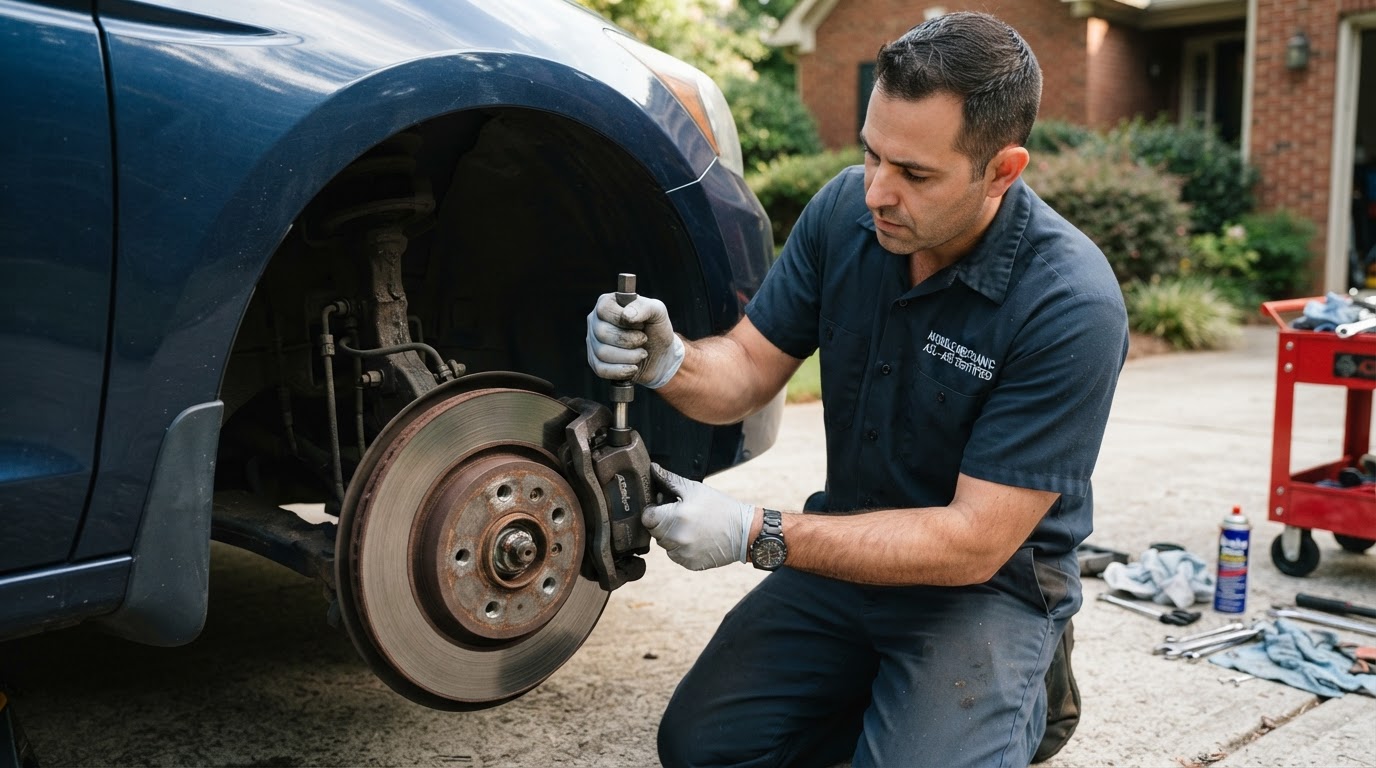
Brake Rotors
Brake rotors work with the pads to slow the vehicle. Rotors can wear below a safe thickness, warp from heat, or become grooved and uneven. Driving on worn pads can score the rotor surface, so rotor condition is checked whenever pads are replaced. Depending on their condition, rotors may need replacement along with the pads. On-site rotor replacement is common when the correct parts are available and the job can be performed safely at the vehicle's location.
Factors Affecting Brake Repair Cost
The cost of a mobile brake pad replacement depends on the vehicle, the specific components that need replacement, the parts chosen, the extent of the damage, and the labor required. Replacing pads alone costs less than replacing pads and rotors together, and damage caused by driving on worn pads can add to the repair. Because every vehicle and situation is different, we do not list fixed prices. Call 912-461-5134 to describe the symptoms and request service information.
How Mobile Brake Service Works
- Call or request service. Provide your Pooler-area location, vehicle information, and a description of the brake symptoms.
- Discuss the problem. The information helps determine the appropriate next step and current service availability.
- Inspection at your location. When the requested service can appropriately be performed on-site, the brake system is inspected, diagnosed, and repaired where the vehicle sits.
When a Vehicle Should Not Be Driven
Some brake problems make a vehicle unsafe to drive, even a short distance to a shop. Grinding brakes, a brake pedal that sinks to the floor, or a vehicle that pulls hard to one side during braking should not be driven. In these cases, mobile service can be a safer option than driving the vehicle, or a tow may be the safest choice depending on the situation. If you are unsure whether it is safe to move the vehicle, call before driving it.
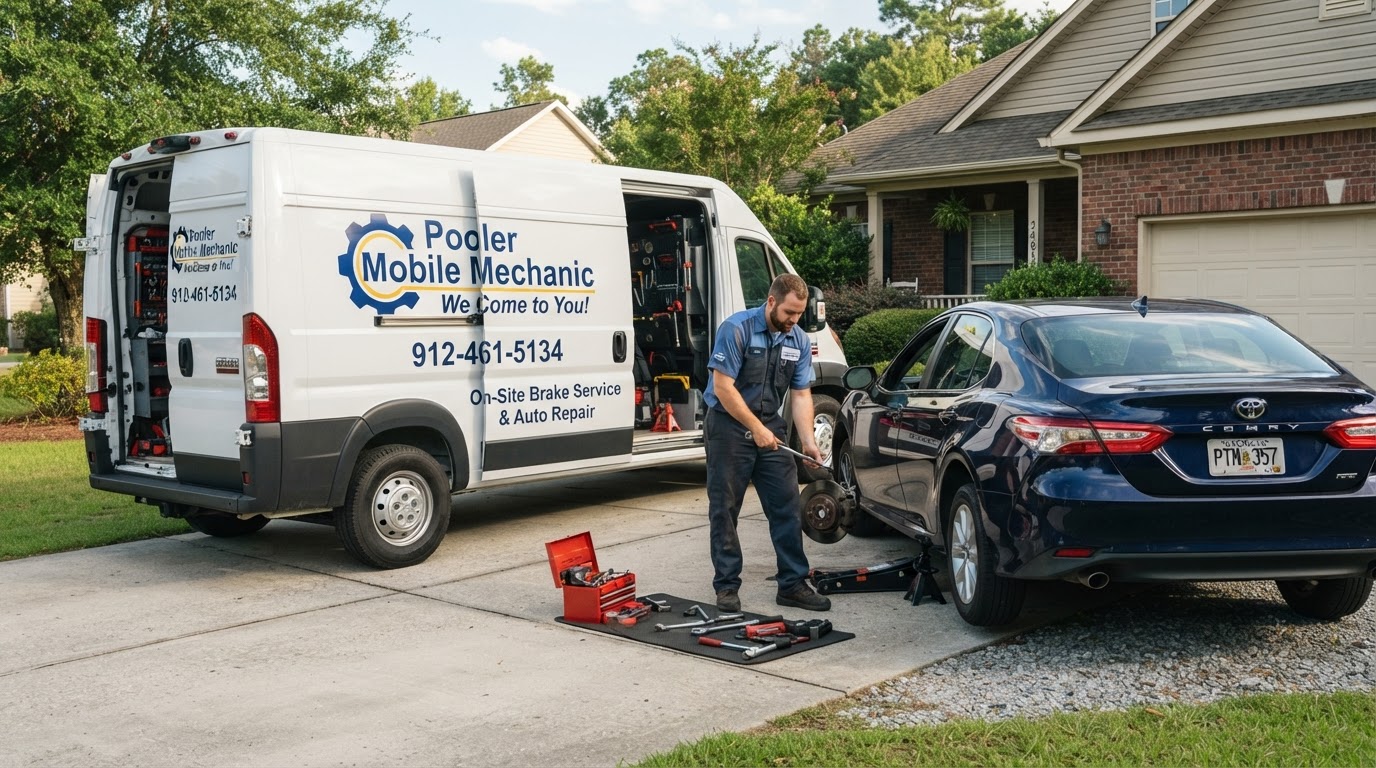
Pooler Service Area
Pooler Mobile Mechanic is a service-area business with no customer-facing storefront. We travel to customers throughout Pooler and surrounding communities within approximately 50 miles, depending on current availability and the requested service. Whether your vehicle is parked at home, at work, or roadside in the Pooler area, mobile brake pad service can often come to you. Call for current availability.
Frequently Asked Questions
Can you replace brake pads at my house?
Yes, brake pad replacement is one of the most common on-site brake repairs and can often be completed at your home or workplace when the correct pads are available and the calipers and hardware are in serviceable condition.
How do I know if my brake pads need to be replaced?
Squealing, grinding, vibration while braking, a soft pedal, or a brake warning light are all signs the brakes should be inspected. A mechanic measures pad and rotor thickness and tests the system to confirm what actually needs replacement.
Do you guarantee same-day brake pad replacement?
No specific arrival time or same-day repair is guaranteed. Availability depends on current scheduling and the parts required. Call 912-461-5134 for current availability.
How much does mobile brake pad replacement cost?
Cost depends on the vehicle, the components that need replacement, the parts chosen, and the labor required. We do not list fixed prices. Call to describe the symptoms and request service information.
Schedule Your Brake Pad Replacement
Do not risk driving on worn brake pads. Call Pooler Mobile Mechanic at 912-461-5134 for current availability.
Call 912-461-5134See our parent category for the full range of on-site repairs: Mobile Auto Repair, or our main brake repair page.