Check Engine Light Diagnostics in Pooler, GA
A check engine light means the vehicle's onboard computer has detected a fault and stored a trouble code. Pooler Mobile Mechanic reads those codes and then tests the related components to confirm the actual cause — at your home, workplace, or roadside location in Pooler, GA.
Licensed & Insured • 10 Years of Experience • 24/7 Availability • Call for current availability.
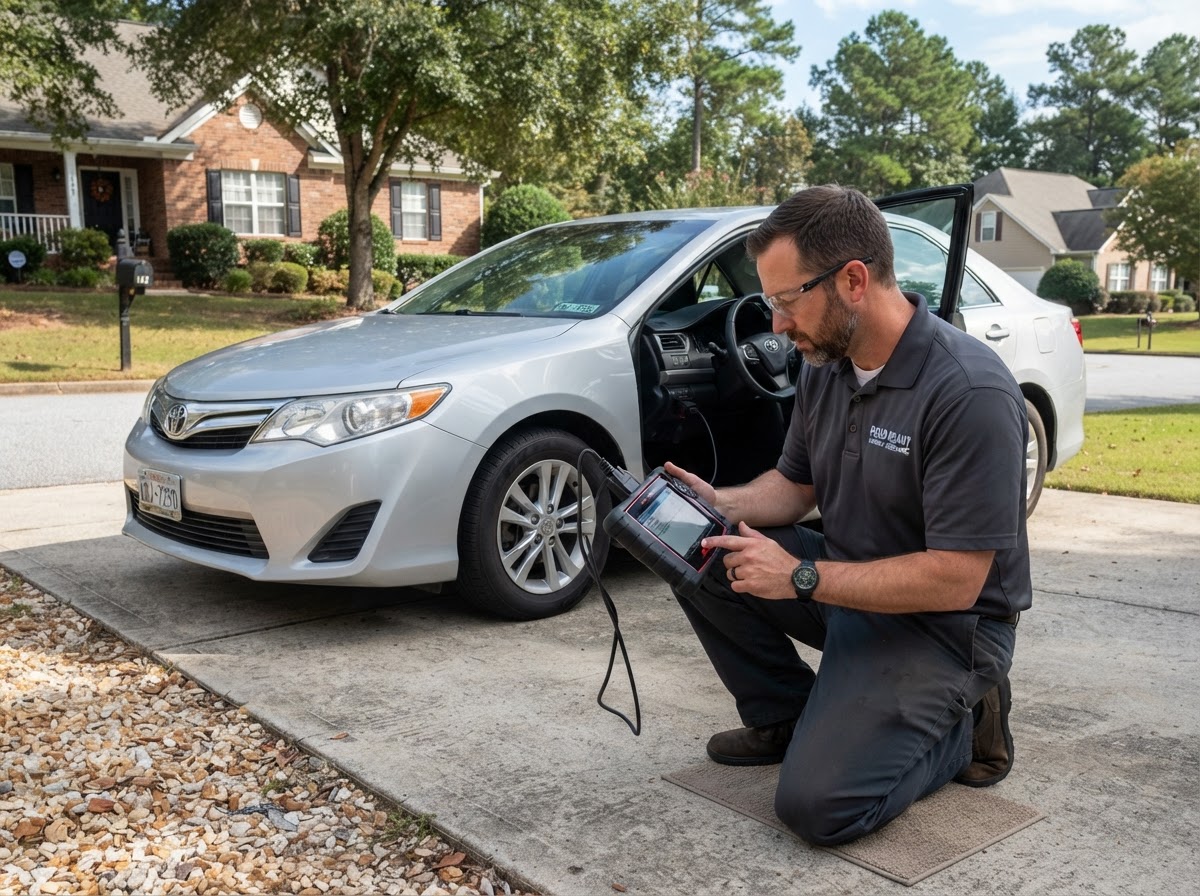
What Mobile Check Engine Light Diagnostics Includes
Mobile check engine light diagnostics covers reading the stored OBD-II trouble codes and then performing the testing needed to confirm what actually caused the light — performed where your vehicle is parked. Instead of arranging a tow and waiting in a shop, a mechanic comes to your driveway, workplace, or another appropriate location in Pooler, GA. Service typically includes connecting a scanner to read the codes, reviewing live data from the affected system, visually inspecting the related components and wiring, and testing individual parts to confirm which one has failed before any repair is recommended.
The check engine light is part of the vehicle's onboard diagnostics system. When a monitored component or system operates outside its expected range, the computer stores a trouble code and turns on the light. Because a single code can have several possible causes, proper mobile diagnostics go beyond reading the code to test the components it points toward. Not every check engine light repair can be completed onsite — some faults require shop equipment or extended testing — and we will always be honest about what can and cannot be done at your location.
Common Check Engine Light Symptoms
The symptoms below are the most common reasons drivers in Pooler call for mobile check engine light service. Symptoms help describe the problem, but they do not by themselves identify the failed component — code reading and component testing are needed before any parts are replaced.
Steady or Flashing Check Engine Light
A steady light usually means a fault has been detected that should be checked, while a flashing light often indicates a more serious condition such as an engine misfire that can damage the catalytic converter if driven. A flashing light generally means the vehicle should not be driven, or driven only carefully to a safe stop.
Rough Idle, Misfire, or Hesitation
A misfire code, rough idle, or hesitation under acceleration can point to an ignition coil, spark plug, fuel injector, vacuum leak, or a mechanical concern. Because several systems can produce the same feeling, the related components are tested rather than guessing which part to replace.
Reduced Fuel Economy
A sudden drop in fuel economy alongside a check engine light can indicate an oxygen sensor, thermostat, or fuel-delivery issue. The code helps narrow the search, but the component still has to be tested to confirm it has actually failed.
Failed Emissions or Inspection
A check engine light will cause a vehicle to fail an emissions test or state inspection. Diagnosing and resolving the underlying fault — not just clearing the code — is what allows the vehicle to pass once the monitor has completed its self-check.
Light That Comes and Goes
An intermittent check engine light that turns off and returns can indicate a failing sensor or a loose connection that only acts up under certain conditions. On-site testing while the problem is present can be more useful than dropping the vehicle at a shop and hoping it acts up again.
Why a Trouble Code Alone Does Not Identify the Failed Part
This is the most important thing to understand about check engine light diagnostics: a stored trouble code names a system or a monitored parameter, not necessarily the exact part that failed. An oxygen sensor code, for example, can be caused by the sensor itself, a vacuum leak, a fuel-delivery issue, or damaged wiring to the sensor. A misfire code can point to an ignition coil, a fuel injector, a vacuum leak, or a mechanical concern. A catalyst efficiency code can stem from an actual catalytic converter problem or from an upstream sensor reading incorrectly.
This is why reading a code is only the first step. The related components and circuits still have to be tested to confirm which one has actually failed. Replacing parts based on a code alone often leads to replacing good components and still having the same problem — and the light coming right back on. Diagnosis may require inspection and testing of related systems, not just the one the code names.
Inspection and Diagnosis
A thorough check engine light diagnostic follows a logical sequence. It starts with the symptoms you describe, moves to reading the stored codes, and then tests the components and circuits the codes point toward. Live data is checked against expected values, and the results are compared to confirm the fault before any repair is recommended. The goal is to identify the actual failed component, not just the system that flagged a problem. We do not recommend replacing parts based solely on a trouble code.
Factors Affecting Diagnostic Cost
The cost of check engine light diagnostics depends on the vehicle, the code stored, the time required to isolate the fault, the parts needed once the problem is confirmed, and the location of the vehicle. A straightforward sensor test is different from an intermittent fault that requires extended testing. Because every situation is different, we do not publish fixed diagnostic prices. Call 912-461-5134 to describe the vehicle and the symptom and request service information.
How Mobile Service Works
You call or submit a service request with your location, vehicle information, and a description of the symptom. We discuss the problem and confirm current availability. When the requested diagnostics can appropriately be completed onsite, a mechanic comes to your vehicle in Pooler, reads the codes, tests the related components, and explains what the testing shows and what the next step should be. You receive a clear explanation of the fault before any repair is performed.
When a Vehicle Should Not Be Driven
A flashing check engine light, a severe misfire, noticeable loss of power, or any symptom that makes the vehicle unsafe to drive means it should not be driven, or driven only carefully to a safe stop. Continuing to drive with an active misfire can damage the catalytic converter and turn a minor repair into a much larger one. If the vehicle is unsafe or has stopped running, consider emergency mobile mechanic assistance or towing rather than risking further damage.
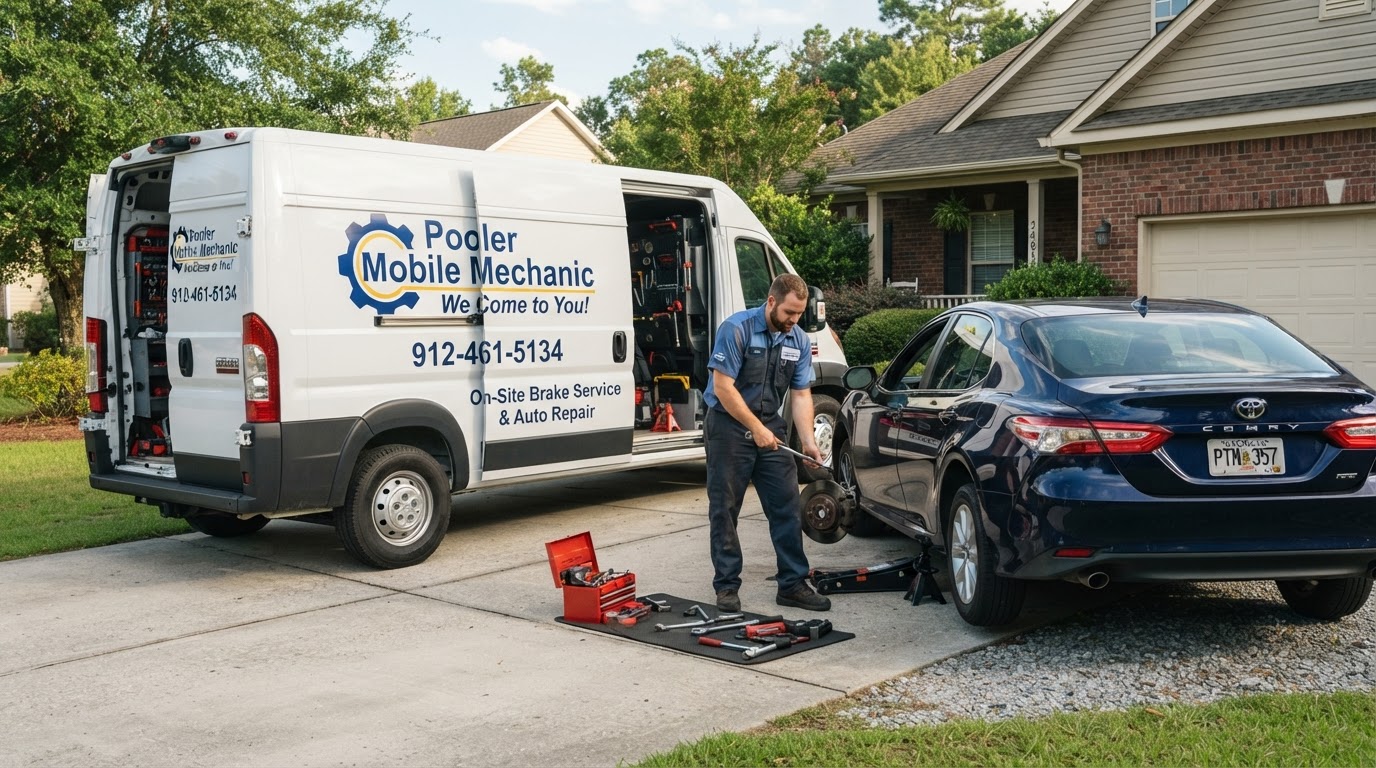
Pooler Service Area
Pooler Mobile Mechanic is a service-area business with no customer-facing storefront. We travel to customers throughout Pooler and surrounding communities within approximately 50 miles, depending on current availability and the requested service. Whether you are near Pooler Parkway, I-95, I-16, or the Savannah/Hilton Head International Airport area, call to confirm service availability at your location.
Frequently Asked Questions
Can you tell me what's wrong just from the code?
A trouble code points to a system or monitored parameter, not always the exact failed part. The related components are tested to confirm the actual cause before any parts are replaced, so you are not paying for components that were not the problem.
Can I just clear the code and keep driving?
Clearing a code turns off the light temporarily but does not fix the underlying fault. The light will return if the problem is still present, and driving with an active fault can cause additional damage. The fault should be diagnosed and resolved.
How much does check engine light diagnostics cost?
Cost depends on the vehicle, the code stored, the time required to isolate the fault, and any parts needed once the problem is confirmed. We do not publish fixed prices. Call 912-461-5134 to discuss the vehicle and request service information.
Do you offer 24/7 service?
Pooler Mobile Mechanic offers 24/7 availability. Call 912-461-5134 for current availability and scheduling information. No specific arrival time or same-day service is guaranteed.
Is it safe to drive with the check engine light on?
A steady light should be checked promptly, but a flashing light or any severe symptom — misfire, loss of power, or unsafe handling — means the vehicle should not be driven. When in doubt, stop safely and call for assistance.
Check engine light on? Call for current availability.
Call 912-461-513424/7 availability. No specific arrival time or same-day service is guaranteed.