Mobile Radiator Repair in Pooler, GA
An overheating engine, coolant pooling under the front of the vehicle, or a temperature gauge climbing past normal can all point to a radiator problem. Pooler Mobile Mechanic brings radiator diagnosis, repair, and replacement to your home, workplace, or roadside location in Pooler, GA so you can address the issue before it leads to serious engine damage.
Licensed & Insured • 10 Years of Experience • 24/7 Availability • Call for current availability.
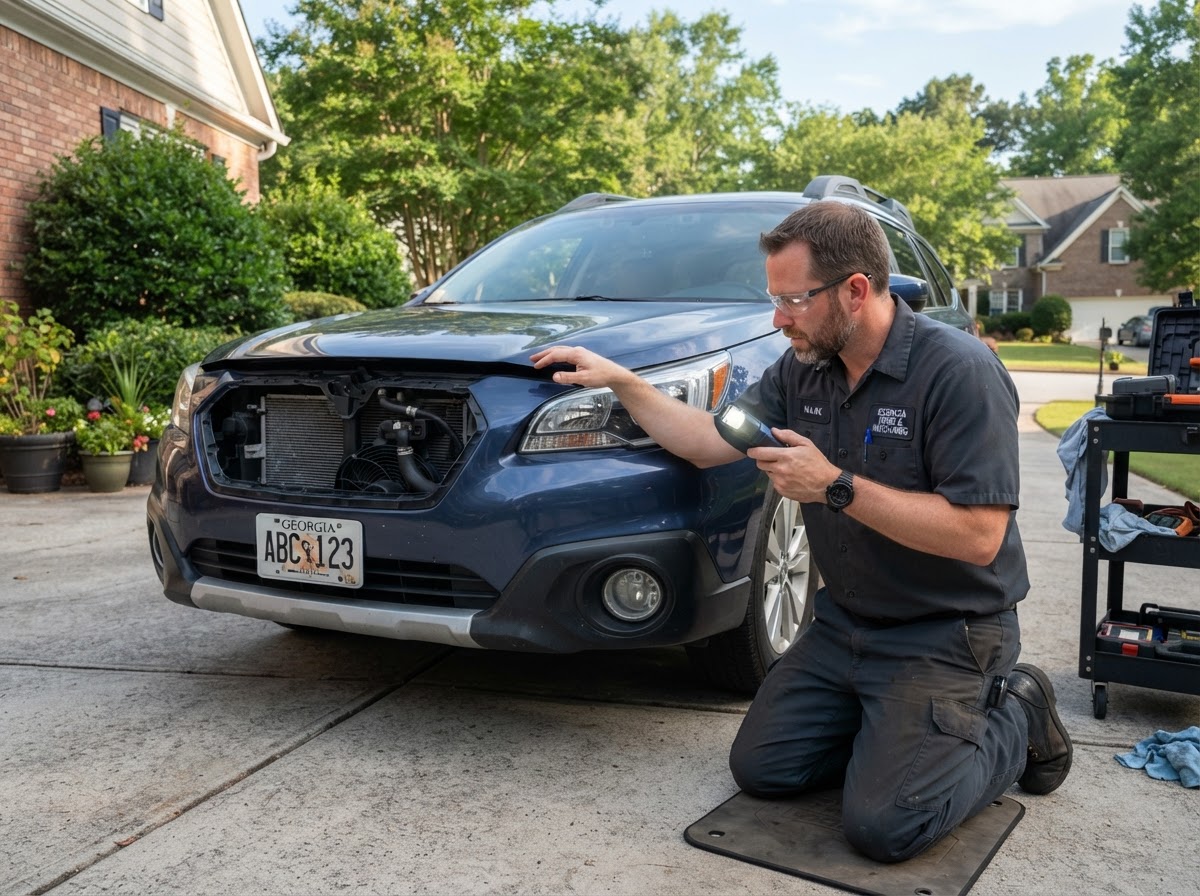
What Mobile Radiator Repair Includes
Mobile radiator repair covers the inspection, testing, and repair of the radiator and the components that keep your engine at a safe operating temperature — performed where your vehicle is parked. Instead of arranging a tow and waiting in a shop, a mechanic comes to your driveway, workplace parking lot, or another appropriate location in Pooler, GA. Service typically includes a visual inspection for leaks and damage, a coolant level and condition check, pressure testing to locate the source of a leak, testing the radiator cap, inspecting hoses and clamps, and repairing or replacing the radiator or related component when testing confirms the cause.
The radiator removes heat from the coolant after it circulates through the engine. When a radiator leaks, becomes clogged, or a fin or tank cracks, the engine can overheat quickly and cause costly internal damage. Not every temperature warning means the radiator has failed, though — a low coolant level, a stuck thermostat, a failed water pump, or even a broken belt can cause similar symptoms, so proper mobile diagnostics come before any parts are replaced.
Common Radiator and Cooling Symptoms
Radiator problems often give warning before they become a breakdown. The symptoms below are the most common reasons drivers in Pooler call for mobile radiator service. Symptoms help describe the problem, but they do not by themselves identify the failed component — pressure testing and component inspection are needed before any parts are replaced.
Engine Overheating or Temperature Warning
A temperature gauge that climbs above normal, a red temperature warning light, or steam from under the hood are the clearest signs of a cooling system problem. If the engine is overheating, the vehicle should be stopped safely to avoid internal engine damage. Overheating can be caused by a leaking or clogged radiator, low coolant, a stuck thermostat, a failed water pump, or a broken drive belt.
Coolant Leaks and Puddles Under the Front of the Vehicle
Bright green, orange, pink, or blue fluid under the front of the vehicle is usually coolant. A radiator leak can come from a cracked plastic tank, a damaged core, a failed seam, a leaking radiator cap, or a split hose connected to the radiator. A pressure test helps pinpoint the exact source so the correct component is repaired rather than guessing.
Low Coolant Without an Obvious Leak
Coolant that disappears with no visible puddle can indicate a small external leak that burns off on hot surfaces, a failing radiator cap that no longer holds pressure, or an internal leak. Internal coolant loss can be a sign of a more serious issue and should be diagnosed before the engine is driven further.
Heater Not Working or Blowing Cold
A cabin heater that blows cold air can be linked to low coolant level, a stuck thermostat, or a problem with the heater core. Because the heater relies on hot coolant from the engine, a cold heater is often an early warning of a cooling system issue that may involve the radiator.
Inspection and Diagnosis
Radiator repair starts with diagnosis, not guessing. A mobile mechanic checks the coolant level and condition, performs a pressure test to locate external leaks, inspects the radiator core and tanks for cracks, seepage, and damage, checks the radiator cap, evaluates hoses and clamps, and inspects the drive belt that powers the water pump. Only when testing confirms the failed component is a repair recommended. The goal is to identify the actual cause so you are not paying for a radiator when the real problem was a split hose or a stuck thermostat.
Radiator Repair vs. Radiator Replacement
Not every radiator problem requires a full replacement. A leaking hose, a failed radiator cap, or a small external leak may be repairable at the vehicle's location. A radiator with a cracked tank, a damaged core, heavy internal clogging, or multiple leaks often needs to be replaced. Whether a repair or a replacement is appropriate depends on what testing finds and the condition of the radiator. Related cooling system repair and serpentine belt replacement may be needed depending on what testing finds.
Factors Affecting Repair Cost
The cost of radiator repair depends on the vehicle, the specific component that has failed, the parts required, and the labor to access and replace that component. A leaking hose or radiator cap is typically a quicker repair than a full radiator replacement, and a radiator on a truck is different from one on a compact car. Because the actual cause is not known until the system is tested, the most accurate way to get repair information is to describe the symptoms and vehicle so the problem can be diagnosed first.
How Mobile Service Works
Call 912-461-5134 and describe the symptoms, your vehicle, and your location in the Pooler area. That information helps determine the appropriate next step and current service availability. When the requested service can appropriately be completed onsite, a mechanic comes to the vehicle to inspect and test the radiator and cooling system. Some radiator repairs require equipment, parts ordering, or facilities that are not available onsite, in which case the options will be explained so you can decide how to proceed.
When a Vehicle Should Not Be Driven
A vehicle that is actively overheating should not be driven. Continuing to drive an overheating engine can cause serious and expensive internal damage, including a blown head gasket or warped cylinder head. If the temperature gauge is in the red or steam is coming from under the hood, pull over safely, turn off the engine, and call for help. A vehicle with a major coolant leak or no coolant should also not be driven. In some cases towing is the safer option, and that will be explained based on the situation.
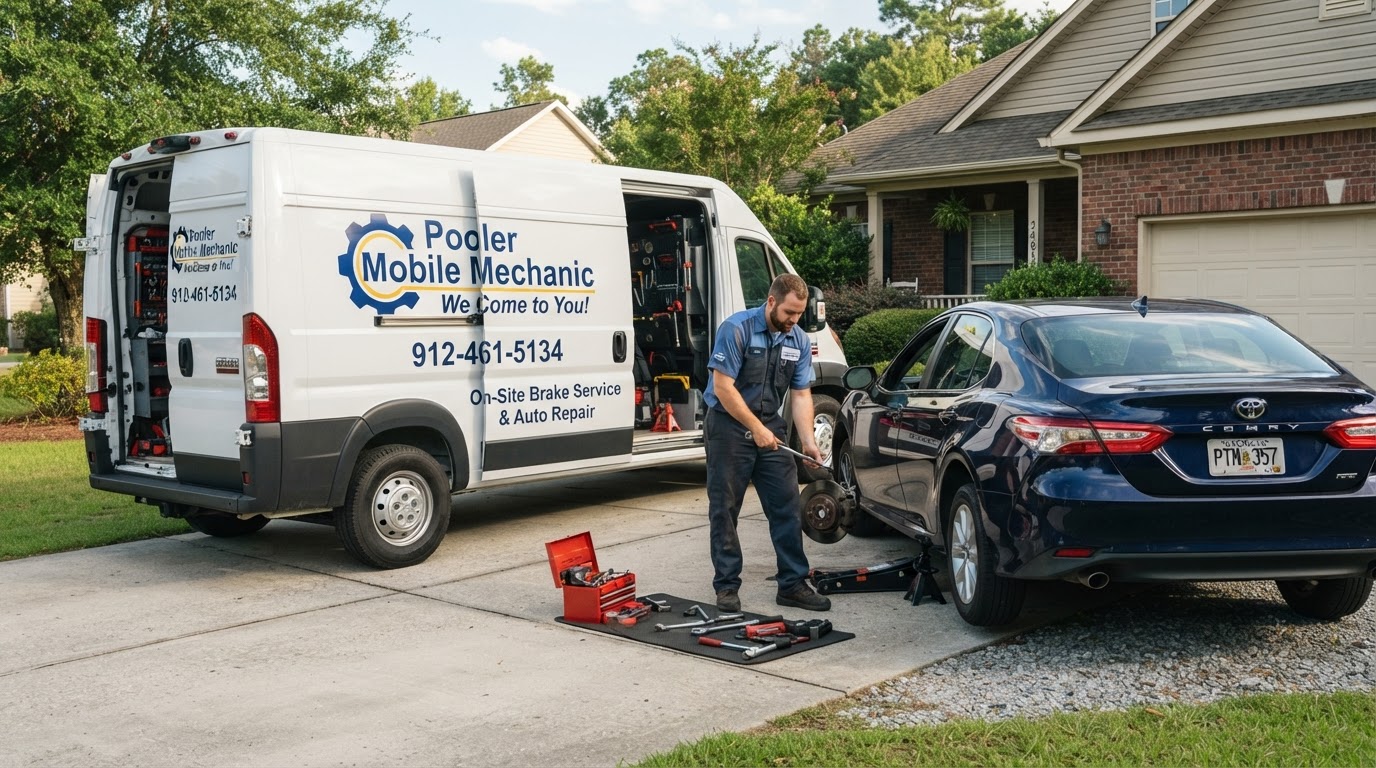
Serving Pooler and the Surrounding Area
Pooler Mobile Mechanic is a service-area business that travels to customers throughout Pooler, Georgia and surrounding communities within approximately 50 miles, depending on current availability and the requested service. There is no shop location to drive to — service comes to the vehicle. Service is available 24/7. Call for current availability.
Frequently Asked Questions
Can a radiator be repaired at my location?
Many radiator-related problems — such as a leaking hose, a failed radiator cap, or a small external leak — can be addressed where the vehicle is parked. A radiator with a cracked tank, a damaged core, or heavy clogging often requires replacement, and some jobs need parts ordering or equipment that is not available onsite. The options will be explained after diagnosis.
How do I know if it is the radiator or something else?
Overheating and coolant leaks can come from the radiator, hoses, the water pump, the thermostat, the radiator cap, or even a broken drive belt. Symptoms alone do not identify the failed component. A pressure test and component inspection are used to confirm the cause before any parts are replaced.
How much does mobile radiator repair cost?
Cost depends on the vehicle, the failed component, the parts required, and the labor to access and replace it. A hose or cap repair is typically quicker than a full radiator replacement. Because the cause is not known until the system is tested, describe the symptoms and vehicle so the problem can be diagnosed first. Call 912-461-5134 to discuss your vehicle.
Should I drive if my car is overheating?
No. A vehicle that is actively overheating should not be driven. Pull over safely, turn off the engine, and call for help. Continuing to drive an overheating engine can cause serious internal damage. In some cases towing is the safer option.
Need Radiator Repair in Pooler?
Don't wait for an overheating engine to cause bigger problems. Call 912-461-5134 or request service below. 24/7 availability — call for current availability.
Call 912-461-5134See related services: Cooling System Repair, Serpentine Belt Replacement, Mobile Diagnostics.